
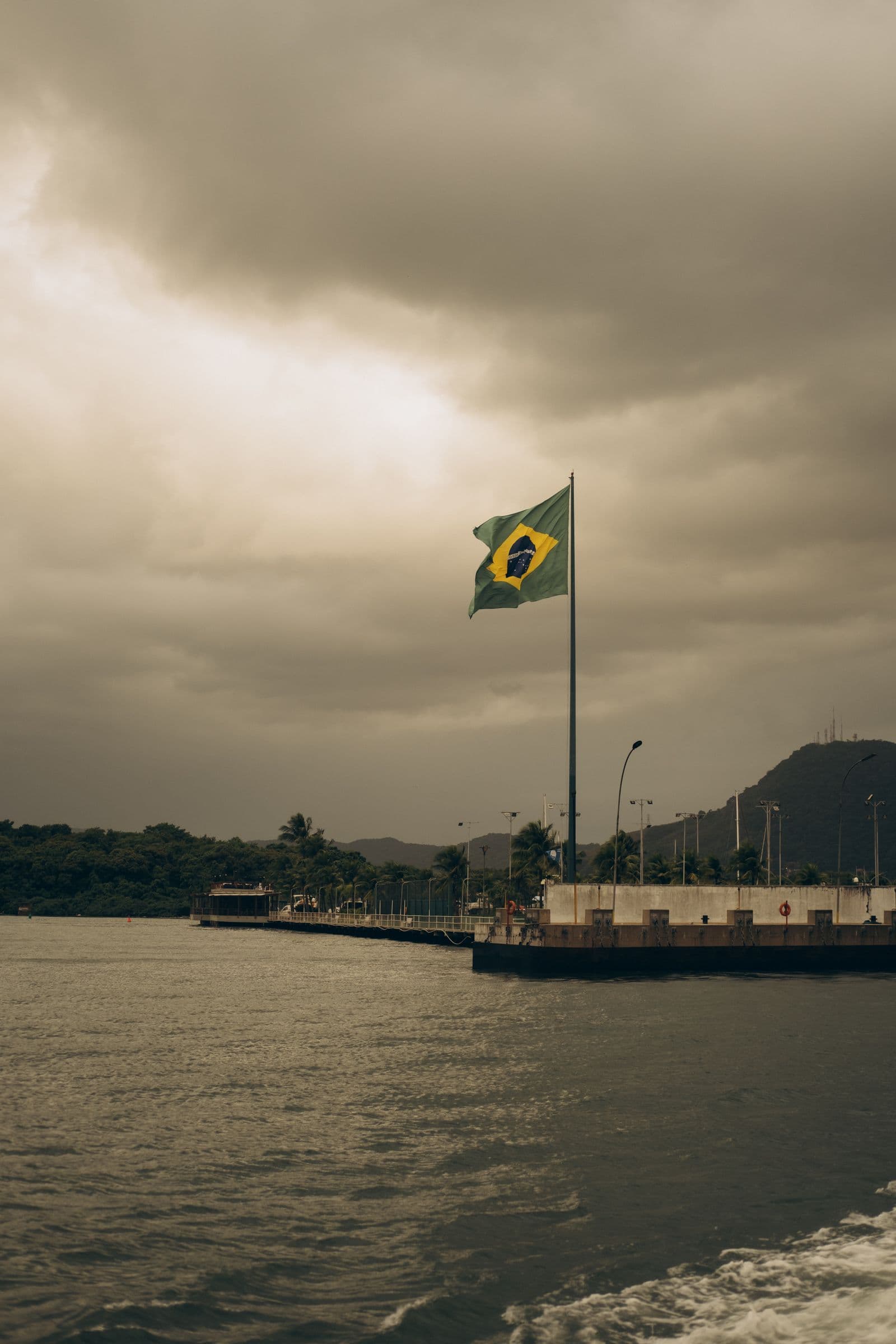
When Tariffs Turn Political: What Brazil's 25% Shock Means for Cross-Border Operators
The US decision to impose 25% tariffs on Brazil ahead of an election is a reminder that trade policy now moves on political time, not commercial time. Operators need facilitation on the ground, not forecasts from a distance.
The United States has imposed 25% tariffs on Brazil with an election looming, and the timing tells you everything about how trade policy now works. This is not a measure calibrated to a current-account imbalance or a specific dumping case that will unwind on a predictable legal schedule. It is a lever pulled against a political calendar. For anyone with a supply chain, a supplier relationship, or a capital commitment running through Brazil, that distinction matters more than the headline rate.
Political time is faster than commercial time
A tariff justified on economic grounds gives you something to model. You can price the duty, adjust margins, petition for exclusions, and wait for the machinery of trade adjudication to run its course. A tariff attached to an election cycle gives you none of that. It can escalate on rhetoric, hold longer than the underlying dispute warrants, or reverse overnight if the political incentive flips. The variable you are actually managing is not the 25%. It is the volatility around it.
We have seen operators make the same error repeatedly: treating a politically-motivated measure as if it were a stable commercial cost and building a hedging strategy around a number that was never the real risk. The real risk is duration and unpredictability, and that requires a different response entirely.
Why this lands hardest on Energy & Natural Resources
Brazil's exposure to the US market concentrates heavily in Agribusiness and adjacent Energy & Natural Resources supply chains. These are the sectors where a 25% tariff does not merely trim a margin, it reroutes global flows. When a major agricultural exporter suddenly faces a wall on its largest developed-market outlet, the volume does not disappear. It seeks new buyers, often at a discount, reshaping pricing dynamics across markets that have nothing to do with the original dispute.
This is precisely where APEX's Market Development & Facilitation practice earns its keep. Our embedded teams in-market do not send a memo about diversification and wait. They identify the alternative buyers, navigate the customs and documentation shifts that a tariff triggers on the ground, and pressure-test which partner relationships survive a political shock and which were only ever transactional. Regulatory navigation is not a slide. It is a phone call to the right official and a signed agreement with a viable counterparty.
The complementary move: Strategy & Growth
Facilitation solves the immediate access problem. But a politically-timed tariff should also force a structural question, and that is where our Strategy & Growth practice works alongside the facilitation team rather than after it. If your Brazil-to-US flow can be interrupted by an electoral calculation, the market-entry logic that put all your eggs in that corridor needs revisiting. That may mean nearshoring, establishing an alternative processing footprint, or entering a third market to rebalance exposure. The integration matters: our facilitation team surfaces what is actually possible on the ground, and the strategy team turns that into a defensible operating position.
The signal beyond Brazil
Read this alongside the wider commodity picture and the message sharpens. Gold's record-breaking run and renewed threats to Iran's oil supply beyond the Strait of Hormuz point to the same underlying condition: hard assets and physical supply chains are repricing around geopolitical risk, not fundamentals alone. Brazil's tariff is one instance of a broader pattern in which political decisions, not markets, are setting the terms of trade.
For cross-border operators, the lesson is not to retreat from exposed markets. It is to stop treating political risk as a residual footnote to a commercial model. Build the diversification before you need it, keep facilitation capacity embedded where your volume moves, and assume the next lever will be pulled on someone else's calendar. That is the difference between reacting to a tariff and having already priced the possibility of one.
- US slaps 25% tariffs on Brazil with election looming — DW Business
- Will gold prices extend their record-breaking run? — DW Business
- Iran's oil supply threat extends beyond Strait of Hormuz — DW Business