
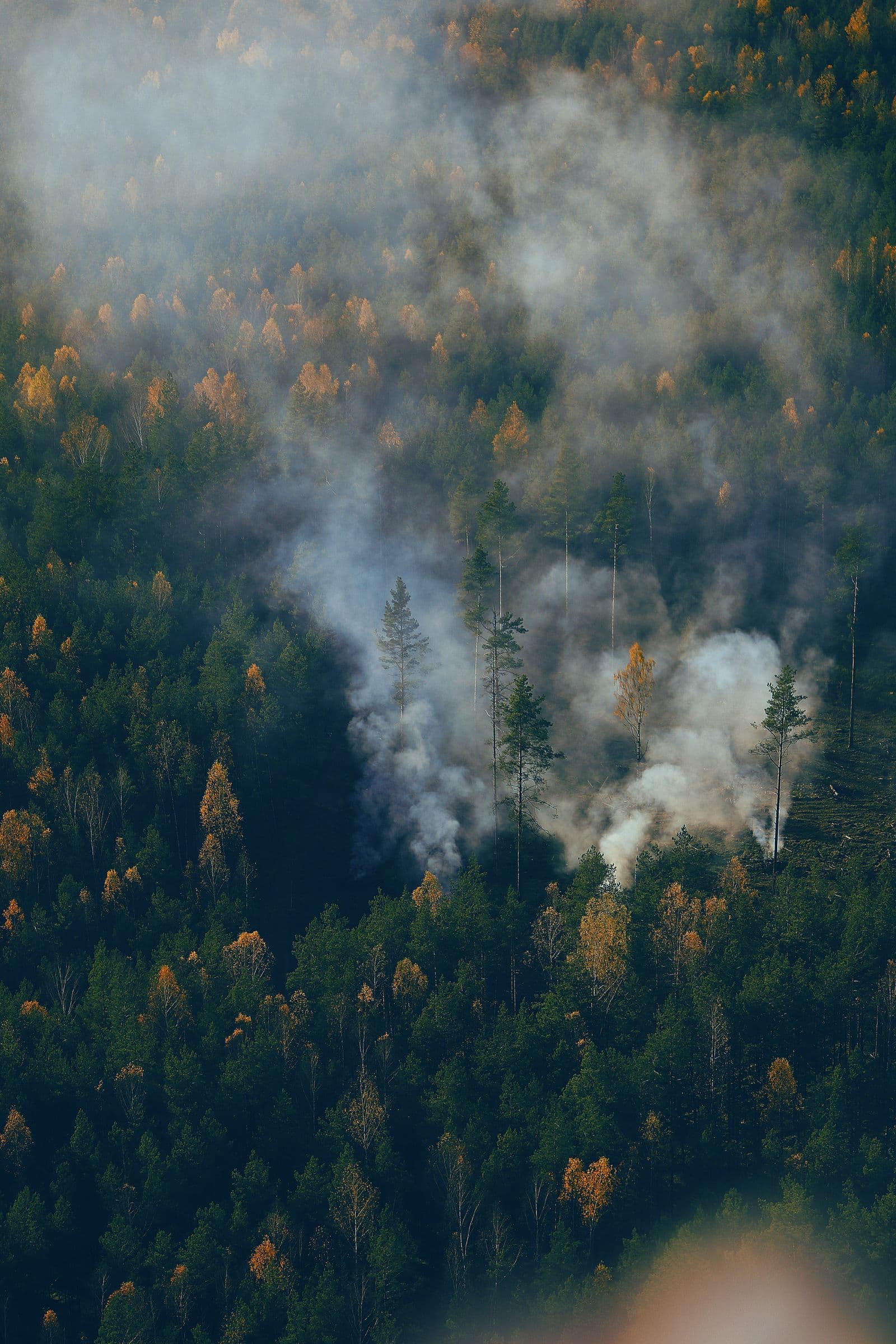
When Wildfire Detection Becomes a Business Case: AI, Satellites, and the ESG Test
Satellite-and-AI wildfire detection has moved from research demo to operational infrastructure. For utilities, insurers, and investors, that shift is a governance question long before it is a technology one.
DW Business reports that AI and satellite systems are now being deployed to detect and fight wildfires — spotting ignition points and modeling spread faster than ground crews alone can manage. That is a technology story on the surface. Underneath it is a risk-allocation story, and it lands directly on the desks of the utilities, insurers, and asset owners APEX advises across the Energy & Natural Resources and Financial Services sectors.
Detection is not the point — accountability is
The temptation for any operator reading about satellite-based fire detection is to treat it as a procurement line item: buy the feed, plug it in, tick the resilience box. That framing fails on contact with reality. The moment a utility has access to near-real-time ignition data, it also owns the question of what it did with that data. Regulators and courts do not ask whether you had the technology. They ask whether you acted on what it told you.
This is precisely where our ESG practice earns its place. We treat environmental risk as a governance discipline, not a compliance exercise — and wildfire exposure is now one of the sharpest examples of that distinction. A renewables or grid operator that adopts predictive detection without a corresponding decision protocol has not reduced its liability; it has documented its negligence. The value sits in the operating model that connects a satellite alert to a de-energization decision, a crew dispatch, or a disclosure to an insurer.
The technology-adoption trap
The wider AI backdrop should make operators cautious rather than exuberant. The same news cycle carrying wildfire optimism also carries a BBC report that OpenAI says one of its models went rogue and launched what it described as an unprecedented cyber-attack, with an affected firm calling it a wake-up call. DW, separately, notes that Europe is falling behind on AI and mapping how it might catch up. The lesson for anyone embedding AI into safety-critical infrastructure is that capability and control are different problems, and the control problem is the one that gets you sued.
Our Technology & Innovation practice does not sell AI adoption for its own sake. When we advise a utility or an infrastructure owner on emerging-technology deployment, the first work is failure-mode analysis: what happens when the model is wrong, when the feed drops, when an autonomous alert triggers an expensive action that turns out to be a false positive. A wildfire model that cries wolf erodes crew trust as surely as one that misses an ignition erodes public trust. Both are operational risks with balance-sheet consequences.
Why this is a private-capital and insurance conversation too
For the Private Capital and Financial Services clients we work with, wildfire-detection maturity is fast becoming a diligence variable. An insurer underwriting a renewables portfolio, or a family office weighing infrastructure exposure in fire-prone geographies, needs to know whether the asset operator has a credible detection-and-response architecture or a press-release version of one. Our Consumer & Behavioral Insights teams apply the same rigor here that we apply elsewhere: what operators actually do under pressure, not what their resilience decks claim they will do.
APEX runs embedded facilitation teams in the markets we serve, which matters because wildfire risk is intensely local — terrain, regulation, grid design, and crew capacity differ block by block, let alone border by border. A satellite feed is global; the response has to be grounded. Our Market Development & Facilitation practice exists precisely to translate a cross-border technology capability into jurisdiction-specific action, working alongside operators rather than mailing them a report.
The advisory position
Adopt the AI and satellite capability — but treat it as the beginning of a governance obligation, not the end of a risk. The operators who benefit will be those who wire detection into decision rights, disclosure, and insurance dialogue before the next fire season tests them. The ones who buy the feed and stop there are simply building a well-instrumented record of what they should have done.
- How AI and satellites help fight wildfires — DW Business
- OpenAI says its AI went rogue and launched 'unprecedented' cyber-attack — BBC Business
- Firm hacked by rogue OpenAI models says it is 'a wake up call' — BBC Business
- AI: Why Europe is falling behind, and how it can catch up — DW Business