
Wildfire AI Is a Climate-Risk Play, Not a Tech Novelty
Satellite-and-AI wildfire detection is quietly reshaping how utilities, insurers, and infrastructure owners price and manage climate risk across borders. Here's what operators should do about it.
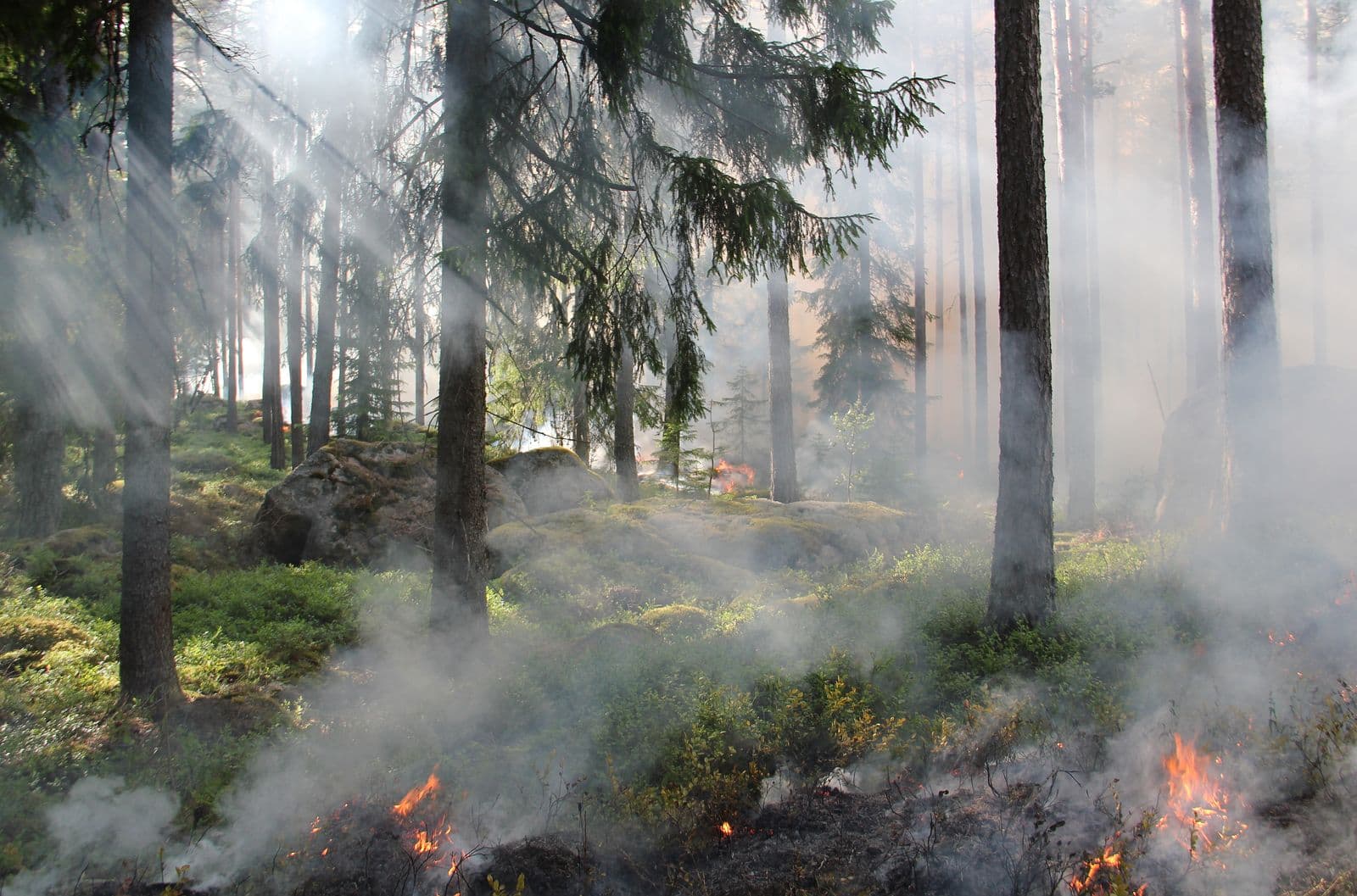
DW Business reports that AI models paired with satellite imagery are now detecting wildfires earlier and predicting their spread more accurately than legacy ground-based monitoring. For technology commentators this is a story about clever algorithms. For the operators and investors we advise, it is something more consequential: the emergence of a mature climate-risk instrument that will reprice assets, reshape insurance underwriting, and redraw where capital is willing to build.
The signal is not the technology. It's the pricing power it creates.
Early, credible fire detection changes the economics of exposure. When a satellite-AI system can flag ignition within minutes and model the burn corridor, the party holding that data gains leverage over everyone downstream: the utility whose transmission lines sit in the corridor, the insurer writing property cover, the private equity owner of a rural logistics hub, the vineyard or timber concession booked as a real asset.
That leverage cuts both ways. Assets that can demonstrate real-time monitoring and defensible response protocols will command better terms. Those that cannot will find themselves at the wrong end of a widening premium gap. This is precisely the terrain our ESG practice was built for — environmental risk strategy that satisfies investors and regulators without collapsing into a compliance checkbox. Wildfire detection data is fast becoming a due-diligence line item, and the operators who treat it as an operational asset rather than a reporting obligation will separate themselves from the field.
Utilities and infrastructure owners face the sharpest reckoning
For our Energy & Natural Resources and Infrastructure & Real Assets clients, the implication is direct. Utilities & Renewables operators carry both the ignition liability and the grid-hardening cost. Satellite-AI monitoring gives regulators a new benchmark: if the technology exists to detect and predict, the standard of care rises accordingly. Boards that have treated wildfire exposure as an act-of-God tail risk should now treat it as a manageable, measurable operating variable.
This is where our Business Optimization & Transformation practice earns its place. Integrating a detection feed is trivial; rebuilding the operating model around it is not. It means new escalation protocols, retrained field teams, revised maintenance scheduling, and vendor arrangements for satellite and analytics capacity. Organizations scaling faster than their infrastructure — the ones adding renewable capacity across multiple jurisdictions — are especially exposed to the gap between what the technology can do and what their people are equipped to act on.
A cross-border cost calculus
The wider AI backdrop matters here. DW's own reporting notes Europe is falling behind in AI and debating how to catch up, while the sector's cost base is under scrutiny — BBC reports Google is burning through cash on spiralling AI expenses. Wildfire detection sits at the intersection of these pressures: it is a high-value, defensible AI application, but the compute and satellite-access costs are real. For market entrants deciding where to deploy, geography shapes both the wildfire risk and the regulatory appetite to fund mitigation.
This is a Market Development & Facilitation problem before it is a technology one. Access to satellite data partnerships, the regulatory status of AI-driven detection in a given jurisdiction, and the identity of credible local integration partners vary sharply from market to market. Our embedded teams navigate exactly these questions on the ground — not by summarizing the rules from a distance, but by knowing which regulator, insurer, and infrastructure counterparty actually moves the deal.
What we tell clients
Treat wildfire AI as a risk-repricing event, not a procurement decision. Map your asset exposure against the corridors these systems now monitor, quantify the insurance and financing delta of demonstrable early detection, and rebuild the operating protocols that turn a data feed into a defensible response. The firms that do this will convert a climate liability into a financing and underwriting advantage. Those that wait will pay for the delay in premiums and permits.
- How AI and satellites help fight wildfires — DW Business
- AI: Why Europe is falling behind, and how it can catch up — DW Business
- Google burning through cash with spiralling AI costs — BBC Business